
Best Way to Stay Connected in Saudi Arabia: eSIM vs Local SIM vs Roaming (2026)
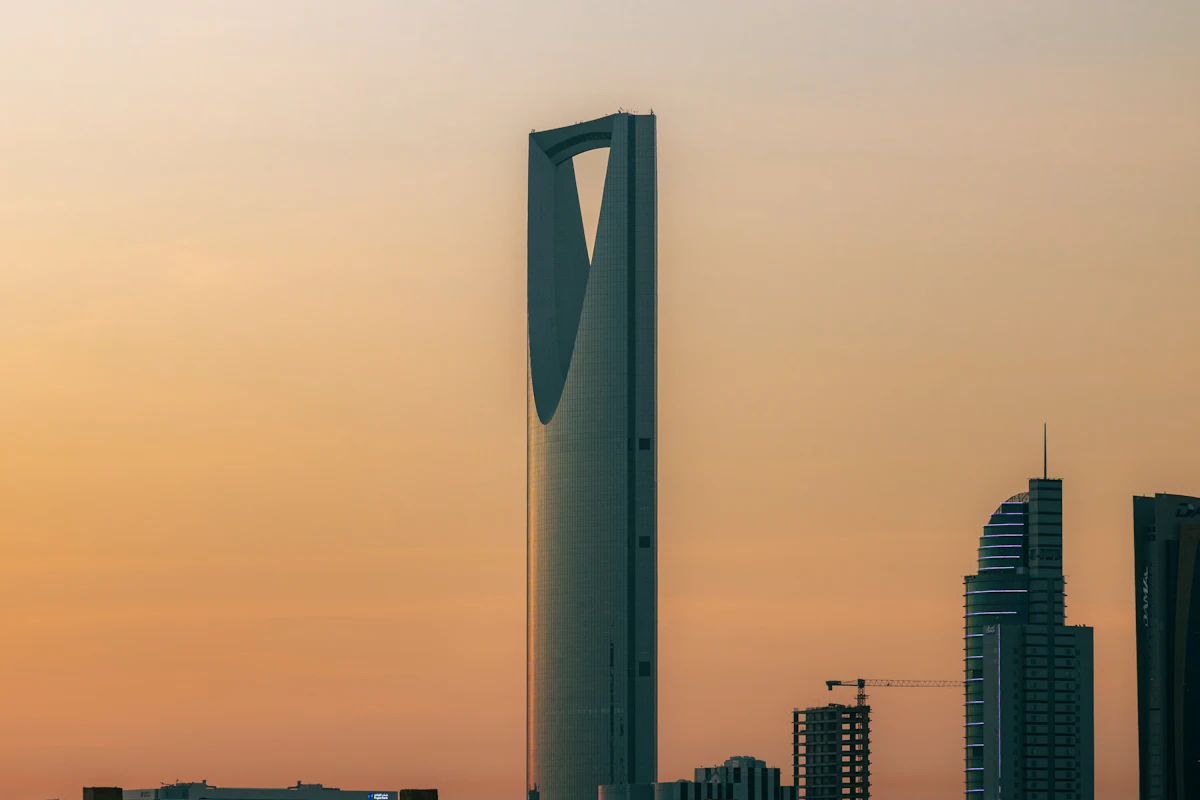
Saudi Arabia has opened up fast — a tourist eVisa launched in 2019 turned a country once reserved for pilgrims and business travelers into one of the region's most talked-about destinations, from Riyadh's glass towers to the carved tombs of AlUla and the Red Sea coast around Jeddah. Millions more arrive each year for Umrah and Hajj. Whichever brings you, staying connected takes a bit more planning than in most countries. Here's a practical comparison of roaming, a local prepaid SIM, and a travel eSIM for 2026.
Option 1: Roaming with your home operator
The zero-effort option, and usually the most expensive. Saudi Arabia sits outside every regional roaming zone, so European, North American and most Asian operators bill it at full international rates — either expensive pay-as-you-go data, or a daily travel pass typically in the €8–15/day range with a capped allowance. A handful of home plans include reasonable global roaming, but that's the exception, not the rule.
Check your own plan's exact terms before assuming either way — the general math is in our eSIM vs roaming cost comparison.
Option 2: A local prepaid SIM
The three Saudi networks are STC, Mobily and Zain, all with strong national coverage. Unlike the US or many countries with a light-touch process, Saudi Arabia requires passport registration and, at most retail points, a fingerprint scan to activate a prepaid SIM — a genuinely more bureaucratic step than most tourist-SIM guides describe for other destinations.
- Where to buy: kiosks at King Khalid International (Riyadh) and King Abdulaziz International (Jeddah) airports, plus STC, Mobily and Zain stores in every major city.
- Cost: tourist-oriented prepaid plans typically run SAR 100–150 (roughly $27–40) for a week or two with several GB of data.
- The catch: a new phone number, passport and often biometric registration at the counter, and a store or airport-kiosk visit that can involve queuing during peak arrival times, especially around Hajj and Umrah seasons.
Option 3: Travel eSIM
A digital SIM profile installed by scanning a QR code, bought online before you fly — no airport queue, no passport scan at a counter, and it activates automatically the moment your phone detects a Saudi network, typically right as you land.
Your physical SIM stays in place, so you keep your usual number for calls, SMS and bank verification codes while all data goes through the eSIM. You can compare current Saudi Arabia eSIM plans here — prices are shown upfront and the QR code arrives by email within seconds of payment, so it's ready before you even check in for your flight.
The one requirement: your phone needs to support eSIM (iPhone XS and newer, most recent Samsung and Pixel models, and other recent flagships). Check the compatibility list if you're not sure.
Cost comparison: a 10-day trip to Saudi Arabia
| Roaming | Local SIM | Travel eSIM | |
|---|---|---|---|
| Typical cost, 10 days | €80–160 (passes) or far more pay-as-you-go | SAR 100–150 (~$27–40) incl. SIM + data | $15–35 depending on data |
| Setup | None | Passport + often fingerprint, in person | 2 min online, before you fly |
| Keep your number | Yes | No — new Saudi number | Yes (dual SIM by design) |
| Best for | Very short trips, generous home plan | Long stays, need a real Saudi number | Most trips: online on landing, no queue |
Honest verdict: for a typical Umrah trip, city break or one- to two-week visit, an eSIM is faster to set up and skips the passport-and-fingerprint counter entirely. A physical SIM only pulls ahead for longer stays or work assignments where an actual Saudi phone number matters.
Mobile coverage in Saudi Arabia: what to expect
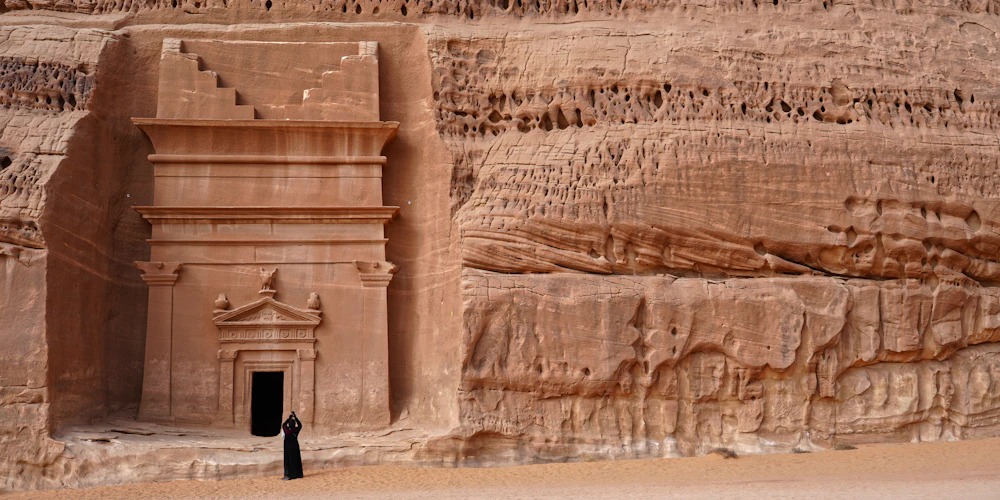
Coverage is strong and modern across the cities that most visitors reach — 5G in Riyadh, Jeddah, Mecca, Medina and Dammam, and good 4G/5G along the main intercity highways. Around AlUla, Hegra and the Red Sea coast, coverage is solid at the visitor sites even though parts of the surrounding desert are still being developed. The truly remote stretches of the Rub' al Khali (Empty Quarter) and other deep-desert routes are a genuine exception — signal there can be thin to nonexistent regardless of carrier, so download offline maps before any long desert drive.
During Hajj and the busiest Umrah weeks, the sheer density of pilgrims around the Grand Mosque in Mecca and the Prophet's Mosque in Medina can slow data speeds at peak times even though the underlying network is strong — operators add temporary capacity for the season, but a crowded moment near the Kaaba is not the place to count on a fast video call. Voice, SMS and basic messaging generally hold up fine.
Practical checklist before you fly
- Sort your eVisa and your data setup before departure. Since the 2019 tourist eVisa launch, most nationalities can apply online in minutes — handle your connectivity the same way rather than figuring it out at the airport.
- If you go the eSIM route, install it at home over WiFi. It won't start until it connects to a Saudi network, so there's no downside to installing early. The step-by-step guide takes about two minutes.
- Turn off data roaming on your home SIM — but leave the SIM itself active so calls and SMS verification codes still arrive.
- Traveling for Umrah or Hajj? Save your group leader's number and hotel address offline, and expect data to be slower (not absent) near the Grand Mosque during the busiest prayer times and peak pilgrimage days.
- Check that your phone is eSIM-compatible and carrier-unlocked. Phones bought on contract in some countries are still SIM-locked, which can block eSIM activation even on an otherwise-compatible model.
Skip the airport SIM counter and the fingerprint scan. Saudi Arabia eSIM plans from eSIM Agora activate the moment you land — QR code by email in seconds.
See Saudi Arabia eSIM plansFAQ
Do I need ID to buy a Saudi SIM card?
Yes — a passport is required, and most retail points and airport kiosks also take a fingerprint scan as part of activation. It's a more bureaucratic process than in many other countries, which is the main reason travelers lean toward an eSIM bought online in advance.
Is the eSIM reliable in Mecca and Medina during Umrah or Hajj?
Coverage around the holy sites and hotels is strong, so calls, messaging and navigation generally work well. During the most crowded prayer times and peak pilgrimage days, data speeds can slow near the Grand Mosque simply due to the sheer number of devices in one place — expect this on any SIM type, not just eSIM.
Will WhatsApp and FaceTime calls work in Saudi Arabia?
Generally yes — Saudi Arabia lifted its restrictions on VoIP calling for major apps in 2017, so WhatsApp, FaceTime and similar voice and video calls work over both local networks and international roaming today, without the workarounds some older guides still mention.
Can I keep my home number active for 2FA codes while using a Saudi eSIM?
Yes — that's the main advantage over a physical Saudi SIM. Your home SIM stays in its slot handling calls, SMS and verification codes, while the eSIM handles data, both active at the same time on a dual-SIM phone.
Does one eSIM cover Riyadh, Jeddah, AlUla and the holy cities?
Yes — a Saudi Arabia plan works nationwide on the same eSIM, so you stay connected from Riyadh and Jeddah to Mecca, Medina and the AlUla region without switching plans as you travel.
Ready to get connected?
Combining Saudi Arabia with other destinations on the same trip? A few nearby options:
eSIM UAE
Dubai, Abu Dhabi and beyond, connected the whole way.
eSIM Egypt
Cairo, Luxor and beyond, no SIM shop required.
eSIM Turkey
Istanbul and beyond, online from the moment you land.
eSIM India
Delhi, Mumbai and beyond, connected on arrival.
Ready to book? Use code WELCOME10 for 10% off your first eSIM Agora order — one less thing to think about before you fly.